Local Plumbing & Drainage FAQs
Have a question about UK building regulations, water board responsibilities, or urgent system troubleshooting? Find clear, expert guidance from Wilsons Plumbing & Drainage, your trusted local specialists since 2005.
First-Hour Resolution
Most plumbing and drainage emergencies resolved within the hour.
Established Authority
Decades of compliance with British Standards and Building Regulations.
No Added VAT Pricing
Clear, upfront rates with zero hidden charges or surprise fees.
Frequently Asked Questions
Need Immediate Help?
Our engineers operate within a 35-mile radius of Lincoln, including Newark-on-Trent, Gainsborough, Retford, and Nottingham. We aim to be with you in under an hour for urgent emergencies.
Call 01522 459342General Plumbing & Repair Advice
Where is my mains stop tap, and what should I do if it's stuck?
In most domestic properties, the internal mains stop tap (also known as a stopcock) is located under the kitchen sink, in an adjacent utility room, or under the stairs. If your home has been modernised or extended, it may also be located near the front entrance or under floorboards.
If you discover your stop tap is completely seized or stiff, do not force it with heavy tools as this can snap the brass spindle and cause catastrophic flooding. Apply a small amount of penetrating lubricant (like WD-40) to the thread, wait, and try gently turning it with a rag for grip. If it remains stuck, call Wilsons Plumbing & Drainage. We can safely replace faulty stop taps and install modern, easy-to-use lever valves or WRAS-approved stopcocks to protect your home.
Why is my radiator hot at the bottom but cold at the top (or vice versa)?
If your radiator is cold at the top but hot at the bottom, this is almost always caused by trapped air in the system. When air collects at the highest point of a radiator, it prevents the hot central heating water from filling the entire panel. This can usually be resolved by bleeding the radiator using a standard radiator key.
If the radiator is hot at the top but cold at the bottom/middle, this indicates a build-up of heavy magnetic iron oxide sludge and rust. This debris is heavy and settles at the bottom of the system, restricting circulation. Bleeding the radiator will not solve this. To fix this permanently, your central heating system requires a comprehensive Power-Flush or the installation of a Magnetic Sludge Filter to clean the water supply and protect your boiler heat exchanger.
Are Saniflo (macerator) systems reliable, and how should they be maintained?
Yes, Saniflo macerators are highly reliable additions to homes, allowing you to add a toilet, utility room, or shower suite in locations without direct access to a standard soil stack. However, they rely on a high-speed rotating blade to shred waste, making them highly sensitive to what is flushed.
- Never flush wet wipes, sanitary products, cotton wool, or dental floss down a Saniflo. These block and bind around the motor blades, leading to motor burnout.
- Avoid harsh chemicals like standard bleach, which can degrade the rubber seals and diaphragms inside the unit. Use dedicated macerator descaler instead.
- In hard water areas like Lincoln and Newark, limescale can build up inside the chamber, causing the motor to run continuously or cycle on and off. Regular descaling is recommended.
Drainage Responsibilities & Sewer Regulations
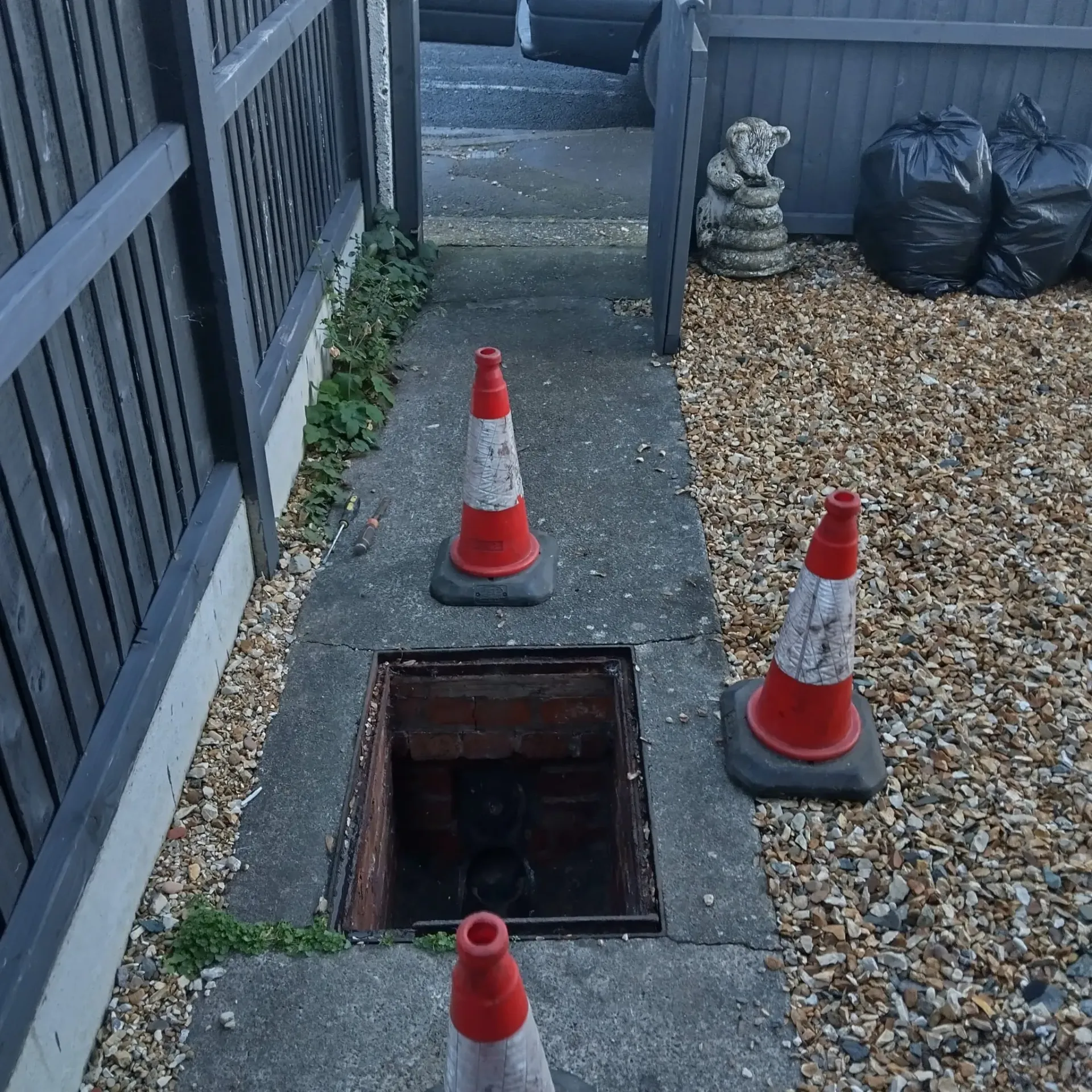
Understanding Your Property Drainage Boundaries
UK property owners are only responsible for the drains inside their property boundaries that serve their house alone. Shared drains or pipes extending outside your property line fall under public water board jurisdiction.
Who is responsible for a blocked drain outside my house boundary?
Under the Water Industry (Schemes for Adoption of Private Sewers) Regulations 2011, responsibility for lateral drains (the section of pipe outside your property boundary) and shared sewers transferred to local water utility companies.
In our service area, this responsibility lies with either Anglian Water or Severn Trent Water:
- Your Responsibility: Any single drain pipe located within your property boundary that serves only your property (private drain).
- Water Company Responsibility: Any shared drain pipe serving multiple properties (even if located on your land) and any pipe that crosses your property line onto public land or neighbouring property.
If you have a blockage inside your private boundary, Wilsons Plumbing & Drainage can clear it rapidly using our advanced High-Pressure Drain Jetting (up to 4500 psi). If the blockage is in the public section, you should contact your local water authority.
What is Building Regulations Part H, and why does it matter?
Building Regulations Part H (Drainage and Waste Disposal) is the legal framework governing how wastewater, surface rainwater, and sewage systems must be constructed, maintained, and modified in England and Wales.
Compliance with Part H ensures that:
- Foul water is properly separated from rainwater drainage to prevent sewer flooding and contamination.
- Pipework and inspection chambers (manholes) are installed with correct fall gradients and sizes to avoid regular blockages.
- Adequate ventilation is provided via waste stacks or air admittance valves (Durgo valves) to prevent foul sewer gases from entering living areas.
All drainage installations and repairs carried out by Wilsons Plumbing & Drainage are fully compliant with Part H guidelines, giving you complete legal and structural peace of mind.
Part G Regulations & Hot Water Cylinders
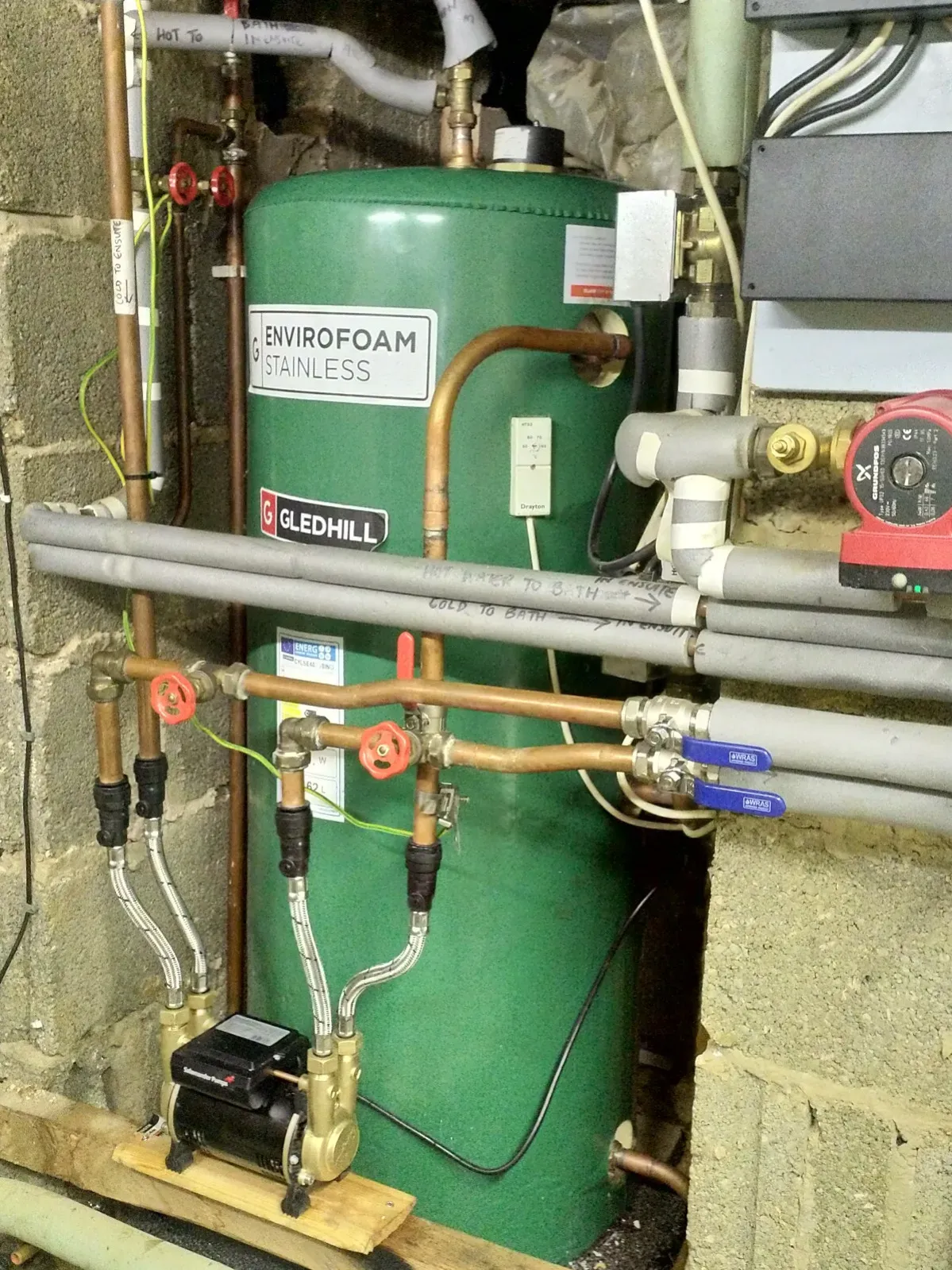
Safe, Regulated Hot Water Installations
Unvented hot water cylinders hold highly pressurised, scalding water. Under Building Regulations Part G, installing or servicing these systems requires professional registration and specialist safety training.
What is Part G of the Building Regulations, and what are G3 qualifications?
Building Regulations Part G covers sanitation, hot water safety, and water efficiency. In particular, Section G3 regulates unvented (pressurised) hot water storage systems.
Because unvented hot water cylinders are fed directly from the mains and store water under pressure, a failing system has the potential to superheat and over-pressurise, which can cause a catastrophic explosion if the built-in safety valves fail.
Therefore, the law dictates that only engineers holding a certified G3 Unvented Hot Water qualification can install, service, or repair these cylinders. Our fully qualified engineers are G3 accredited, ensuring all pressure relief valves, expansion vessels, and double-check valves are installed safely and signed off in compliance with local council regulations.
Why is my immersion heater not heating my water, and does it need replacing?
An immersion heater is an electric heating element situated directly inside your water cylinder. If it stops producing hot water, there are three common culprits:
- The High-Limit Thermostat has Tripped: Modern immersion heaters have built-in safety cut-outs to prevent overheating. If the cylinder water gets too hot, the safety switch trips. This can sometimes be reset manually under the plastic cap of the element.
- Limescale Encrustation: In hard water regions (such as Lincolnshire), mineral deposits build up around the copper heating element. This acts as an insulator, trapping heat inside the element until it burns itself out.
- Failed Element: Over time, thermal fatigue will cause the internal heating filament to fail. This requires a professional replacement.
Wilsons Plumbing & Drainage can diagnose the issue within minutes and carry out replacement work. We stock durable, corrosion-resistant Incoloy and Titanium immersion elements designed to withstand hard water conditions much better than standard copper elements.
Transparent Pricing & Rate Framework
At Wilsons Plumbing & Drainage, we believe in complete transparency. We don't hide charges or add surprise fees. Below is our exact pricing structure, ensuring you know exactly what you will pay before any work begins.
Planned Work
Non-Emergency / Next Day Minimum
Plumbing: £95/hr
£47.50 per additional 30 mins
Drainage: £120/hr
£60.00 per additional 30 mins
Emergency (Daytime)
Standard Hours Call-Out
Plumbing: £85/hr
£42.50 per additional 30 mins
Drainage: £95/hr
£47.50 per additional 30 mins
Out of Hours
After 6pm & All Day Weekend
Plumbing: £105/hr
£52.50 per additional 30 mins
Drainage: £115/hr
£57.50 per additional 30 mins
*All pricing is fully transparent with no added VAT. Replacement parts, if required, are charged separately with your prior approval.
Still Have a Question? Get in Touch Today
Whether you are dealing with a mystery leak, a stubborn blockage, or need standard installation work compliant with British regulations, our friendly, expert engineers are here to support you across Lincoln and the East Midlands.
Call Our 24/7 Helpline
01522 459342Registered Business Office
Wilsons Plumbing & Drainage, Torksey Park, Newark Rd, Torksey Lock, Lincoln, LN1 2EL
Book an Engineer Online
Fill out our rapid response form, and a plumbing coordinator will call you back within 15 minutes.